
Gate valves — full bore, full class range.
The reference isolation valve: a wedge that retracts clear of the bore, giving you an unobstructed flow path and negligible pressure drop. DN15 to DN1200 across the complete class range from #150 to #2500, flanged or buttweld, in carbon steel through super duplex.
- DN15–DN1200
- #150 to #2500
- Flanged & buttweld
- Full bore
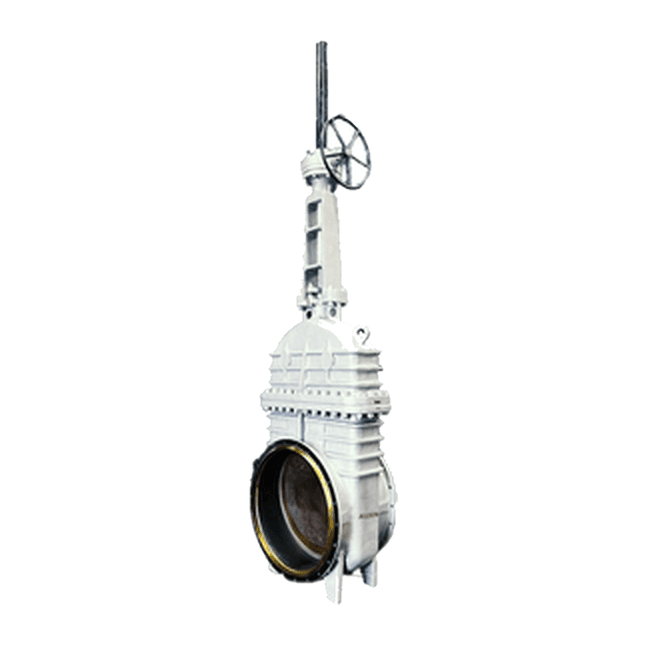
When a gate valve is open, the wedge is fully withdrawn into the bonnet and the bore is completely clear — no disc in the stream, no direction change, essentially no pressure drop. On a large-bore header that runs open for years at a time, that matters more than any other property of the valve.
The other property that matters is closure speed. A multi-turn stem closes slowly and progressively, which on a long liquid line is a feature rather than a nuisance: it decelerates the column gradually instead of stopping it, and avoids the surge that a fast quarter-turn valve would generate. This range covers the full class spread to #2500, so the same valve family carries from utility water up to high-pressure hydrocarbon service.
Specifications.
Figures below are the catalogue envelope. Final model, seat and trim are confirmed against the ALLSEN catalogue before we quote.
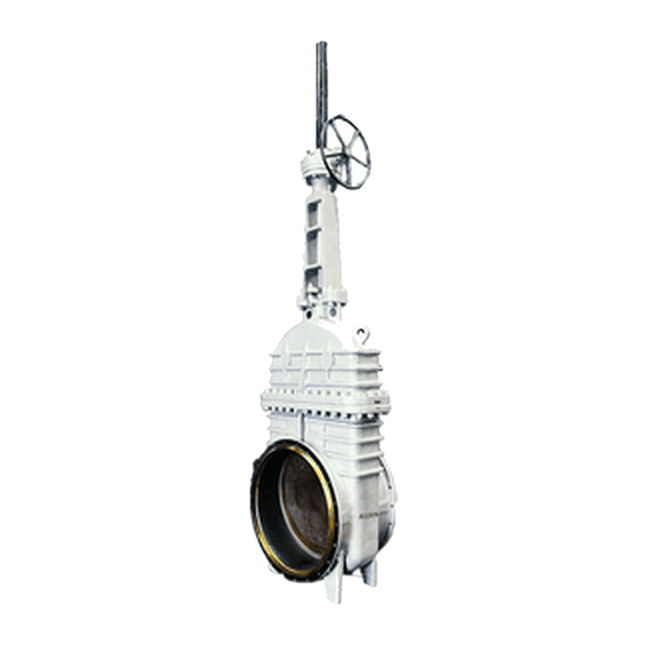
Gate Valves
Flanged and buttweld gate valves from DN15 to DN1200, spanning #150 through #2500, in WCB carbon steel, the CF8 / CF8M / CF3M stainless grades, Gr. 4A–5A duplex, nickel aluminium bronze and aluminium alloys. Handwheel, bevel gear and actuated operation.
| Size range | DN15 – DN1200 |
|---|---|
| Material of construction | WCB / CF8 / CF8M / CF3M / Gr. 4A–5A / NAB / aluminium alloys |
| Pressure rating | #150, #300, #600, #900, #1500, #2500 |
| End connection | Flanged, buttweld |
| Operation | Manual | Gear | Actuated |
| Application | Wastewater, pulp & paper, power plants, mining, chemical plants, oil & gas |
Where this valve does the work.
Oil & gas
Block isolation on hydrocarbon service across the class range, with buttweld ends where a flanged joint would be an unwanted leak path.
Power generation
Feedwater, condensate and utility isolation in thermal plant, where the high classes in this range and full-bore flow are both required.
Chemical & petrochemical
Isolation on process and transfer lines, specified in CF8M, CF3M or duplex according to the media and temperature.
Mining & pulp
Large-bore isolation on clean process and utility water in mining and pulp & paper plants — with knife gates taking the solids-laden duties.
Open or shut. Never in between.
A gate valve is an isolation device, and using it to throttle is the fastest way to destroy one. Partially closed, flow accelerates past the wedge edge and around the seat faces, and the resulting erosion cuts channels into exactly the surfaces that were supposed to seal. The wedge also chatters against the seats, damaging the guide faces. Where you need to control flow, a globe valve is the right tool.
The other decision is stem arrangement. A rising stem tells you the valve position at a glance, which is worth a lot in a plant with hundreds of valves — but it needs vertical clearance above the valve, and that clearance is what installers most often forget to leave. Non-rising stem designs suit constrained headroom and buried service. Check the headroom before you fix the arrangement.
Beyond that it's class, material and ends. This range covers #150 to #2500, so the pressure and temperature of the service set the class; the media sets the body and trim material; and the joint strategy sets flanged versus buttweld. Send us line class, media, temperature and available headroom and we'll specify the valve, then confirm the model against the ALLSEN catalogue.
Supplied mounted and bench-tested, not as loose parts.
Where the valve is automated, we supply valve and actuator as one assembly so the site team isn't marrying up components on a scaffold.
Rack & pinion pneumatic
Extruded aluminium body, tested to 2 million cycles, IP67, maximum torque 2100 Nm. The standard actuator for quarter-turn valves on plant air.
Vane type pneumatic
Patented spring-less design that replaces spring-return actuators for fail-safe duty. Eight models to 46,000 in-lb at 80 psi, −20 °C to 80 °C, AWWA C541 compliant, 2 year / 2 million cycle warranty.
Scotch yoke
Carbon steel scotch-yoke mechanism for severe service in chemical, petrochemical and offshore installations. IP67, maximum torque up to 250,000 Nm.
Electric
50–6000 Nm, AC 24/220/380 V or DC 12/24/48 V (±10%), −25 °C to 70 °C (−40 °C optional), IP67 standard with IP68 optional (15 m / 72 hr), on/off and modulating duty.
Other valves from the same catalogue.
Specifying a full line in one metallurgy is easier when isolation, regulation and non-return all come from the same source.
Butterfly Valves
Concentric, high-performance and triple-offset — every disc MOC
Dual Plate & Single Plate Wafer Check Valves
Wafer-type non-return valves, DN40–DN1200
Y-Type Strainers
In-line pipeline protection, DN25–DN400
Ball Valves
Quarter-turn tight shutoff, DN15–DN300
Knife Gate Valves
Slurry, pulp and solids-laden service, DN50–DN1200
Globe Valves
Throttling and flow regulation, DN15–DN600
Frequently asked questions
Why shouldn't a gate valve be used for throttling?
Because it destroys the sealing surfaces. In the partly-open position, flow accelerates through the restricted gap and erodes the wedge edge and seat faces — the exact surfaces the valve depends on to shut off. The wedge also vibrates against the guides at partial opening, wearing the guide faces and eventually causing it to sit crooked. A gate valve should be either fully open or fully closed; use a globe valve where flow needs to be regulated.
Gate valve or ball valve for isolation?
Both give full-bore flow when open. Choose a ball valve where you want fast, frequent, positive isolation with visible position indication — typically small to medium bore. Choose a gate valve where the bore is large, the class is high (this range runs to #2500, well above the ball valve range), or where slow, progressive closure is needed to avoid surge on a long liquid line. Very large ball valves also become expensive and heavy in a way gate valves don't.
Rising stem or non-rising stem?
Rising stem gives you visual position indication — you can see how far open the valve is from across the plant — and keeps the stem threads out of the fluid. The cost is vertical clearance above the valve, which has to be allowed for at design stage. Non-rising stem keeps the overall height fixed, which suits low-headroom plant rooms, buried installations and valve pits. Confirm the headroom available before specifying.
What pressure classes are available?
This range covers #150, #300, #600, #900, #1500 and #2500 — the full ASME class spread — from DN15 to DN1200. That means the same valve family carries from ordinary utility water service right through to high-pressure hydrocarbon and power-plant duty, with body and trim material selected to match.
When do I need buttweld ends instead of flanged?
Buttweld ends give a permanent, leak-free joint with no gasket, which is why they're standard on higher-integrity hydrocarbon and high-pressure service, and on lines where every flange is another potential leak path to manage. The trade-off is that the valve can't be removed without cutting. Flanged ends are the choice where maintenance access matters or where the valve will be swapped in service.
Need gate valves quoted?
Share size, pressure class, fluid and temperature — we'll specify the valve and quote it with the actuator.