
Butterfly valves, in every disc MOC.
Three butterfly families off one catalogue — resilient-seated concentric for water and HVAC, high-performance double-offset for demanding process duty, and metal-seated triple-offset for steam, cryogenic and hydrocarbon service. Disc material specified to the fluid, not to the price list.
- Concentric
- High performance
- Triple offset
- DN40–DN1200
- Wafer / lugged / flanged
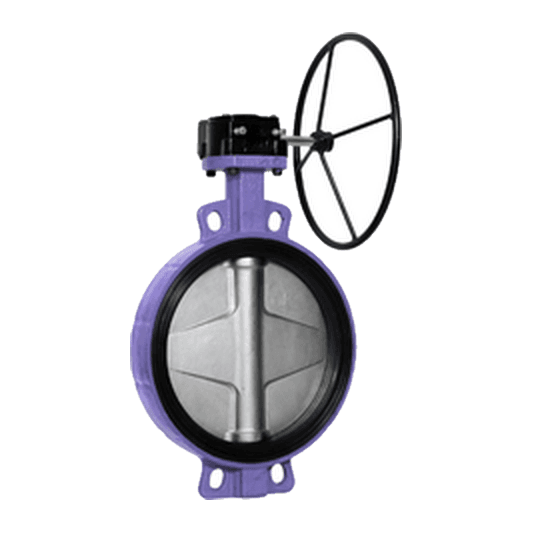
The butterfly valve is the workhorse of large-bore isolation — a quarter-turn disc that gives you a compact face-to-face, low weight and fast operation at sizes where a gate valve becomes impractical to handle. The trade-off is that the disc sits in the flow path, so the seat design and the disc metallurgy decide whether the valve survives your fluid.
ALLSEN builds all three offset geometries, and Trading Engineers specifies across them. That means the recommendation you get is driven by your pressure class, temperature and media — not by whichever body happens to be on the shelf.
3 designs, specified to the duty.
Figures below are the catalogue envelope. Final model, seat and trim are confirmed against the ALLSEN catalogue before we quote.
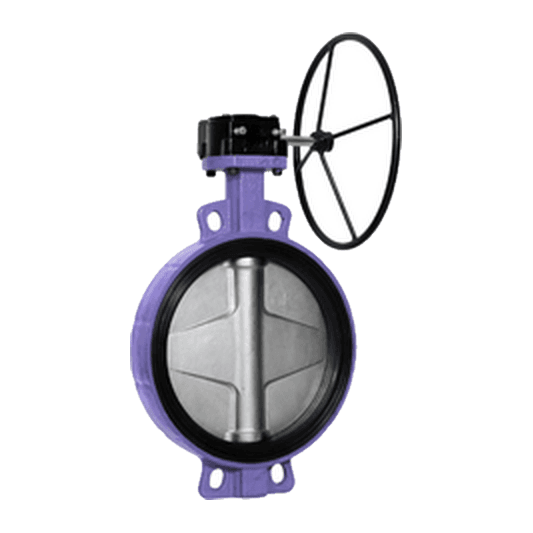
Concentric Butterfly Valves
The classic resilient-seated design — the disc shaft is centred in the bore and the elastomer liner does the sealing. Bubble-tight both ways at low pressure, economical at large diameters, and the default pick for potable water, HVAC chilled-water and effluent lines.
| Size range | DN40 – DN1200 |
|---|---|
| Material of construction | Cast iron, ductile iron, WCB / CF8 / CF8M / CF3M / Gr. 4A–5A / NAB / aluminium alloys |
| Pressure rating | PN6, PN10, PN16 |
| End connection | Wafer, lugged, flanged |
| Operation | Manual | Gear | Actuated |
| Application | Wastewater, potable water, seawater, HVAC, data centres, sugar & ethanol |
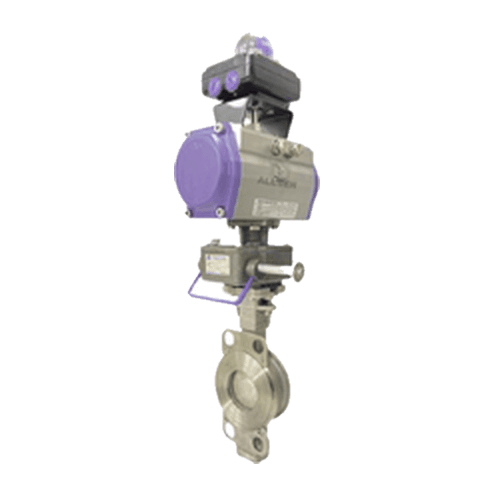
High-Performance Butterfly Valves
Double-offset geometry lifts the disc edge off the seat as it opens, so the seat stops being scrubbed on every cycle. That buys you #150/#300 class ratings, dead-end service and a much longer seat life on duties that would chew through a resilient liner — pharma, sour gas, vacuum and oxygen service.
| Size range | DN50 – DN1200 |
|---|---|
| Material of construction | WCB / CF8 / CF8M / CF3M / Gr. 4A–5A / NAB / aluminium alloys |
| Pressure rating | #150 & #300 |
| End connection | Wafer, lugged, flanged |
| Operation | Manual | Gear | Actuated |
| Application | Water and wastewater, pharma, sour gas, vacuum and oxygen service, steam service, dead-end service |
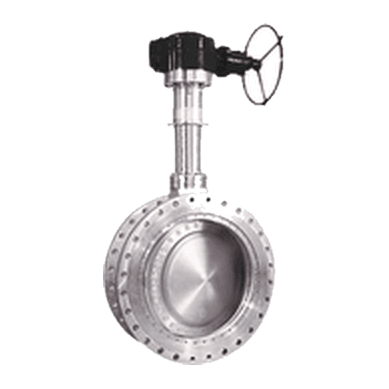
Triple-Offset Butterfly Valves
The third offset makes the seating surface a true cone, so the metal seat closes by torque rather than by interference — zero rubbing, zero elastomer, and a valve that will hold on steam, cryogenic and hydrocarbon duty where a soft seat simply cannot go. This is the butterfly you specify when the alternative is a gate valve you can't fit.
| Size range | DN50 – DN1200 |
|---|---|
| Material of construction | WCB / CF8 / CF8M / CF3M / Gr. 4A–5A / NAB / aluminium alloys |
| Pressure rating | #150 & #300 |
| End connection | Wafer, lugged, flanged |
| Operation | Manual | Gear | Actuated |
| Application | Oil & gas, LNG, steam, power generation, chemical processing, water & wastewater, air separation, cryogenic service |
The disc is what meets your fluid. Specify it accordingly.
Two butterfly valves with identical body castings and identical pressure ratings can have completely different service lives, because the disc is the part sitting permanently in the stream. ALLSEN offers the full spread of disc and trim materials — here is where each one earns its place.
Cast iron / ductile iron
General water, HVAC chilled and condenser water, low-pressure service. The economical baseline where the fluid is clean and non-aggressive.
WCB (carbon steel casting)
General industrial and hydrocarbon duty on non-corrosive media, where the pressure class matters more than the corrosion resistance.
CF8 (cast 304 stainless)
Potable water, mild chemical and food-adjacent service. Good general corrosion resistance without a chloride exposure.
CF8M (cast 316 stainless)
The default upgrade once chlorides appear — effluent, treated wastewater, coastal installations and most chemical process lines.
CF3M (cast 316L stainless)
Low-carbon 316 for welded assemblies and service temperatures where sensitisation and intergranular attack are a risk.
Gr. 4A / 5A (duplex & super duplex)
ASTM A890 duplex grades for seawater, high-chloride and high-strength duty — roughly double the yield strength of 316 with far better pitting resistance.
NAB (nickel aluminium bronze)
Seawater, desalination and marine cooling. Excellent resistance to seawater corrosion and biofouling where stainless would pit.
Aluminium alloys
Weight-critical and low-pressure installations — typically air and non-corrosive gas service on large diameters.
Material selection guidance is general. Final disc, seat and trim specification is confirmed against the ALLSEN catalogue and your fluid data before we quote.
Where this valve does the work.
Water & wastewater
Isolation on raw water mains, treated-water headers, ETP/STP process lines and clarifier feeds. Resilient-seated concentric valves dominate here; CF8M or duplex discs go in once the effluent turns aggressive.
HVAC & data centres
Chilled-water and condenser-water isolation on large-bore headers, where the compact face-to-face of a wafer butterfly saves plant-room space a gate valve would consume.
Steam & power generation
Triple-offset metal-seated valves on steam headers, boiler auxiliaries and turbine service, where soft seats are ruled out by temperature.
Cryogenic & air separation
Extended-bonnet triple-offset valves for LNG, liquid nitrogen and air-separation duty, where the seat has to hold at temperatures no elastomer survives.
Offset geometry follows pressure and temperature — not diameter.
Start with the seat. If the fluid is water-like, under PN16, and ambient, a resilient-seated concentric valve is the correct and cheapest answer — there is no engineering reason to pay for offsets you won't use. The moment you need a #150 or #300 class rating, dead-end service, or a seat that won't be scrubbed on every cycle, the double-offset high-performance body becomes the baseline.
Triple-offset is a different decision again. You specify it when temperature or media rules out elastomer entirely — steam, cryogenic, hydrocarbon, or a fire-safe requirement — and you want the bidirectional, torque-seated tightness of a metal seat without the weight and face-to-face of a gate valve.
Once the geometry is fixed, the disc MOC is chosen against the fluid, and only then does the operator get sized. Manual lever is practical to roughly DN200; beyond that it's a gearbox, and above that or on any automated loop, a pneumatic or electric actuator sized to the valve's break torque at your differential pressure.
Supplied mounted and bench-tested, not as loose parts.
Where the valve is automated, we supply valve and actuator as one assembly so the site team isn't marrying up components on a scaffold.
Rack & pinion pneumatic
Extruded aluminium body, tested to 2 million cycles, IP67, maximum torque 2100 Nm. The standard actuator for quarter-turn valves on plant air.
Vane type pneumatic
Patented spring-less design that replaces spring-return actuators for fail-safe duty. Eight models to 46,000 in-lb at 80 psi, −20 °C to 80 °C, AWWA C541 compliant, 2 year / 2 million cycle warranty.
Scotch yoke
Carbon steel scotch-yoke mechanism for severe service in chemical, petrochemical and offshore installations. IP67, maximum torque up to 250,000 Nm.
Electric
50–6000 Nm, AC 24/220/380 V or DC 12/24/48 V (±10%), −25 °C to 70 °C (−40 °C optional), IP67 standard with IP68 optional (15 m / 72 hr), on/off and modulating duty.
Other valves from the same catalogue.
Specifying a full line in one metallurgy is easier when isolation, regulation and non-return all come from the same source.
Dual Plate & Single Plate Wafer Check Valves
Wafer-type non-return valves, DN40–DN1200
Y-Type Strainers
In-line pipeline protection, DN25–DN400
Ball Valves
Quarter-turn tight shutoff, DN15–DN300
Knife Gate Valves
Slurry, pulp and solids-laden service, DN50–DN1200
Gate Valves
Full-bore isolation to #2500, DN15–DN1200
Globe Valves
Throttling and flow regulation, DN15–DN600
Frequently asked questions
What is the difference between concentric, high-performance and triple-offset butterfly valves?
It's about where the shaft sits relative to the disc and seat. In a concentric (zero-offset) valve the shaft passes through the centre of the disc and the disc rubs the elastomer liner through its whole travel — simple, bubble-tight at low pressure, economical. A high-performance valve is double-offset: the shaft is behind the disc face and offset from the pipe centreline, so the disc cams away from the seat as it opens, cutting wear and allowing #150/#300 ratings. A triple-offset adds a third, conical offset so the metal seat closes purely by torque with no rubbing at all, which is what makes steam, cryogenic and fire-safe service possible.
Which disc material should I specify for treated effluent or seawater?
For treated effluent, CF8M (cast 316) is the usual baseline because chlorides are present. For raw seawater, desalination intake or coastal cooling, go to a duplex grade (Gr. 4A / 5A) or nickel aluminium bronze — 316 will pit in stagnant, aerated seawater. Send us your chloride concentration, temperature and whether the line sees stagnation, and we'll specify the disc against that rather than a generic table.
Wafer, lugged or flanged — which end connection do I need?
Wafer is the lightest and cheapest, but the valve is clamped between two flanges, so you cannot remove downstream pipework without losing the joint. Lugged bodies have threaded inserts, so the valve can be bolted to one flange and used for dead-end service or downstream isolation during maintenance. Flanged bodies are the heaviest and are standard on larger, higher-class installations. If you'll ever need to strip pipework downstream while the line stays live, specify lugged or flanged.
What size butterfly valve can be operated by a lever?
As a practical rule, hand-lever operation works up to about DN200 depending on differential pressure — beyond that the breakaway torque is more than an operator can comfortably apply, and you move to a worm gearbox with handwheel. Gearboxes are standard through the large sizes; automated loops get a pneumatic or electric actuator sized on the valve's break torque with a safety margin at your maximum differential pressure.
Can ALLSEN butterfly valves be supplied pre-actuated?
Yes. Valves can be supplied with rack-and-pinion or vane-type pneumatic actuators, scotch-yoke actuators for severe service, or electric actuators with on/off or modulating duty. We supply the assembly mounted and bench-tested rather than shipping the valve and actuator separately for the site team to marry up.
Do you supply butterfly valves in Delhi NCR?
Yes — Trading Engineers supplies the ALLSEN valve range across Delhi, Gurgaon, Noida, Greater Noida, Ghaziabad, Manesar and Faridabad from our Mangolpuri, G.B. Road and Faridabad offices. Installation and commissioning are available on a chargeable basis alongside our pump and blower work.
Need butterfly valves quoted?
Share size, pressure class, fluid and temperature — we'll specify the valve and quote it with the actuator.